Anti-money laundering (AML) is a set of laws, rules, and processes that try to find people who try to hide illegal money as legal income.
Money laundering is a way to hide crimes like small-time tax evasion, drug dealing, public corruption, and funding of groups that are considered terrorist organisations.
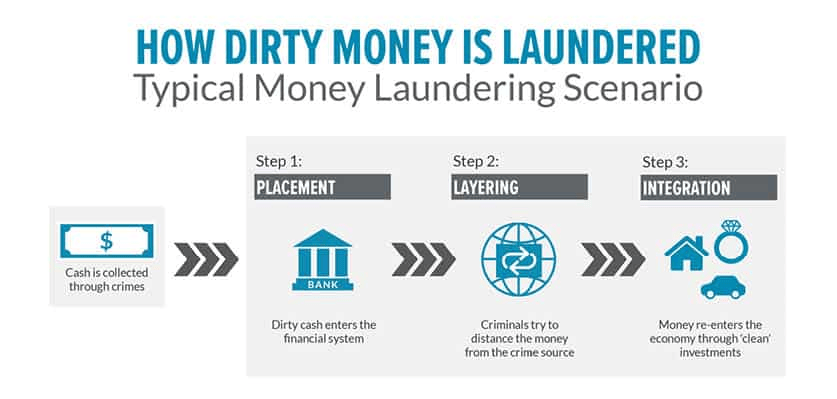
The 3 stages are:
1. Placement: The first step in hiding money is to turn the money from a crime into a legal source of income. It could be put into investments or bank accounts. At this point, the main goal of anti-money-laundering measures would be to find illegal sources of money. During the first stage, criminals are at risk because they are moving a lot of money and putting it straight into the financial system.
2. Layering: After the money has been put in place, the second step is called layering or structure. This means breaking up large sums of money into a number of smaller transactions. The idea is that these smaller trades are below the limit set by anti-money laundering rules and won’t set off any alarms. Layering often takes place across lines to make it harder for anti-money laundering officials in the UK to find wrong doing.
3. Integration: At the end of the money-laundering process, the money is put back into the criminal’s legal bank accounts. As with the earlier stages, this usually includes a series of smaller transactions. For example, the money could have been used to buy an expensive item like jewellery or a piece of real estate. The expensive item can be sold, which leaves a trail of money that came from a legal source.