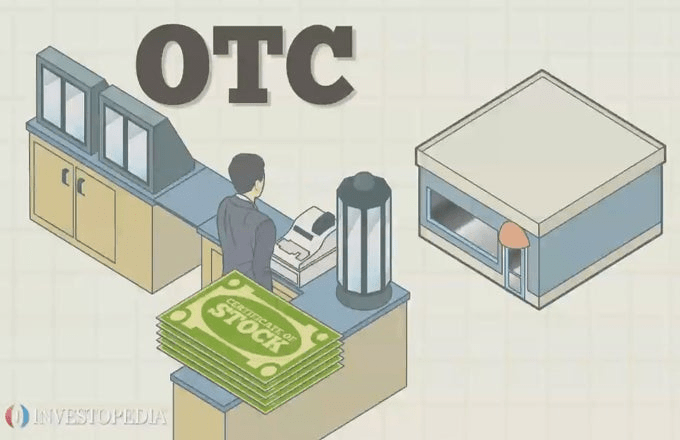
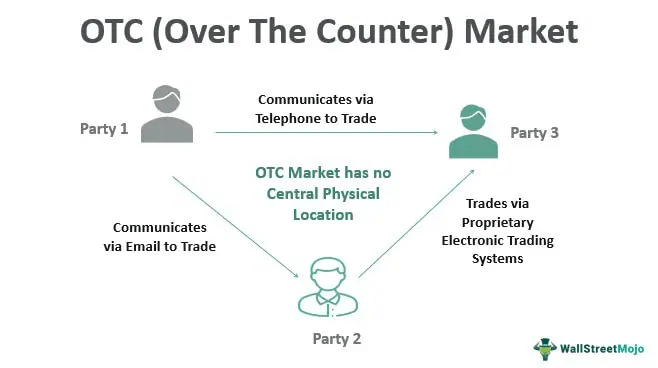
Over-the-counter (OTC) markets are not controlled by a central exchange or broker. Instead, people trade stocks, commodities, currencies, and other assets directly with each other.
Over-the-counter markets do not have physical locations; instead, trading is conducted electronically. This is very different from an auction market system.
RISKS OF OTC MARKETS:
Even though over-the-counter (OTC) markets work well when things are normal, there is a risk, called “counter-party risk,” that one of the parties to a trade will fail before the trade is finished or won’t make the payments they are supposed to make now and in the future. During times of financial stress, like the global credit crisis of 2007–2008, lack of transparency can also lead to a vicious circle.
Mortgage-backed securities and other derivatives like CDOs and CMOs, which were only traded on the over-the-counter (OTC) markets, couldn’t be priced accurately because there were no buyers. Because of this, more and more sellers stopped making markets, which made the liquidity problem worse and led to a credit crunch around the world. One thing that regulators did after the crisis to fix this problem was to use clearinghouses to handle the processing of OTC deals after they were made.

A REAL WORLD EXAMPLE:
A portfolio manager owns about 100,000 shares of a stock that trades on the over-the-counter market. The PM decides it is time to sell the security and instructs the traders to find the market for the stock. After calling three market makers, the traders come back with bad news. The stock has not traded for 30 days, and the last sale was $15.75, and the current market is $9 bid and $27 offered, with only 1,500 shares to buy and 7,500 for sale. At this point, the PM needs to decide if they want to try to sell the stock and find a buyer at lower prices or place a limit order at the stock’s last sale with the hope of getting lucky.

